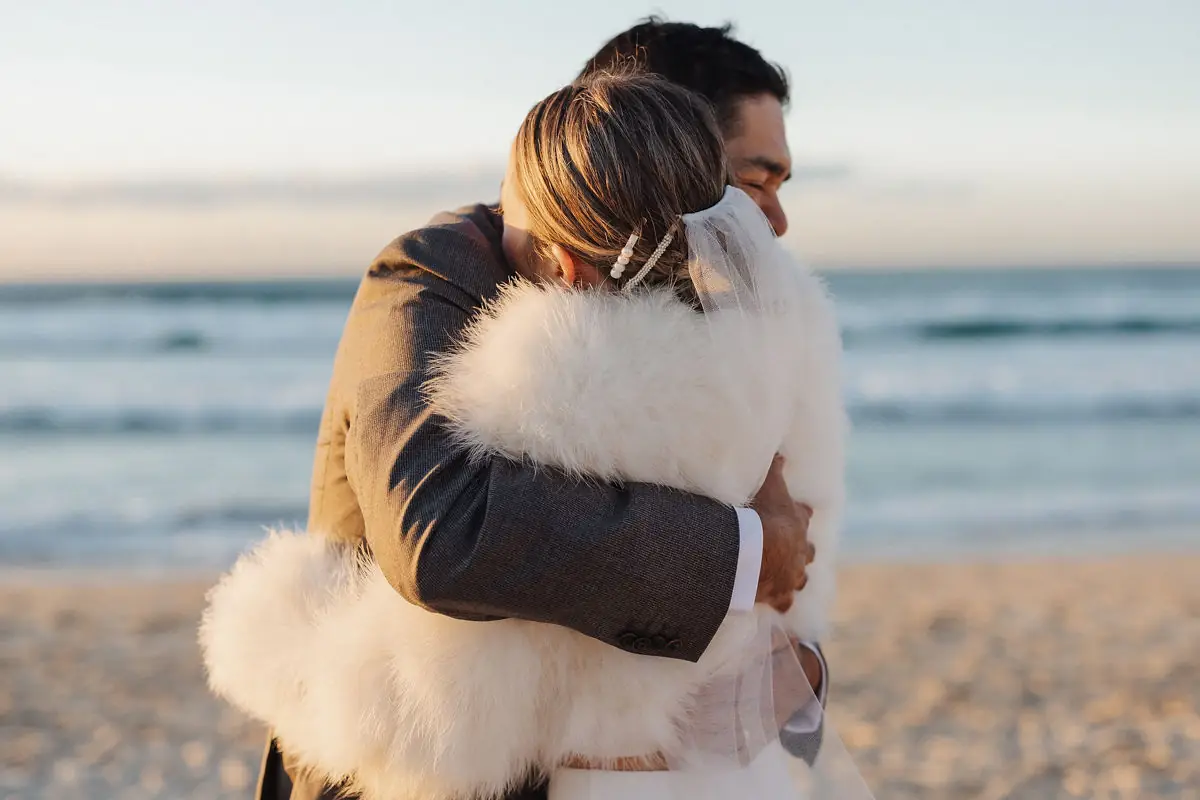
Natural light is the first teacher, and it stays the strictest. A strobe forgives a late start; window light does not. If you learn to read it, every other light becomes easier, because you understand direction, fall-off, and colour temperature as things that happen to you, not things you impose.
Window light is best read as a single soft source with a hard edge. Stand a subject parallel to the glass and you get flat, safe light. Turn them so the window is at 45 degrees and the face gains form — cheekbone, jaw, the line of the nose. The closer they are to the glass, the faster the fall-off and the more sculpted the face.
Time of day is a decision, not a default. Golden hour is famous for a reason: low, warm, directional, and forgiving of skin. Blue hour, just after sunset, is cooler and quieter — good for silhouettes and mood, bad for detail. Midday sun is not the enemy people say it is, but you have to work in open shade or bounce it; shooting a face in direct noon sun is asking for raccoon eyes.
Overcast days are my favourite for portraits. A cloud layer is a giant softbox — contrast drops, colour stays saturated, and you can shoot in any direction without fighting a hot highlight. The mistake is treating overcast as flat light; it still has direction, just gentler. Face your subject toward the brightest part of the sky for soft modelling.
Reflectors and negative fill are the whole kit you need. A white card on the shadow side lifts it without looking lit. A black card — negative fill — does the opposite, deepening shadow and adding shape when the sky is too even. I carry both, plus a small diffusion panel for when a single window is too harsh.
Why does natural light teach more than strobes? Because it forces you to read the room before you raise a camera. Strobes let you skip that step, which is why so much studio work looks competent and forgettable. Natural light makes you a watcher first and a photographer second.
Practical advice: scout at the time you will shoot, not the day before. Light at 4pm in October is not light at 4pm in June. Bring a grey card, shoot a test frame, and look at the histogram — your eye adapts, the histogram does not. And when the light turns, follow it; do not make the subject wait while you chase a setup that has already gone.